Poker and Pot Odds: The Complete Mathematical Guide
Master pot odds calculations in poker. Learn how to compare pot odds to hand odds, make profitable calling decisions, and understand implied odds in Texas Hold'em.
Poker and Pot Odds: The Complete Mathematical Guide
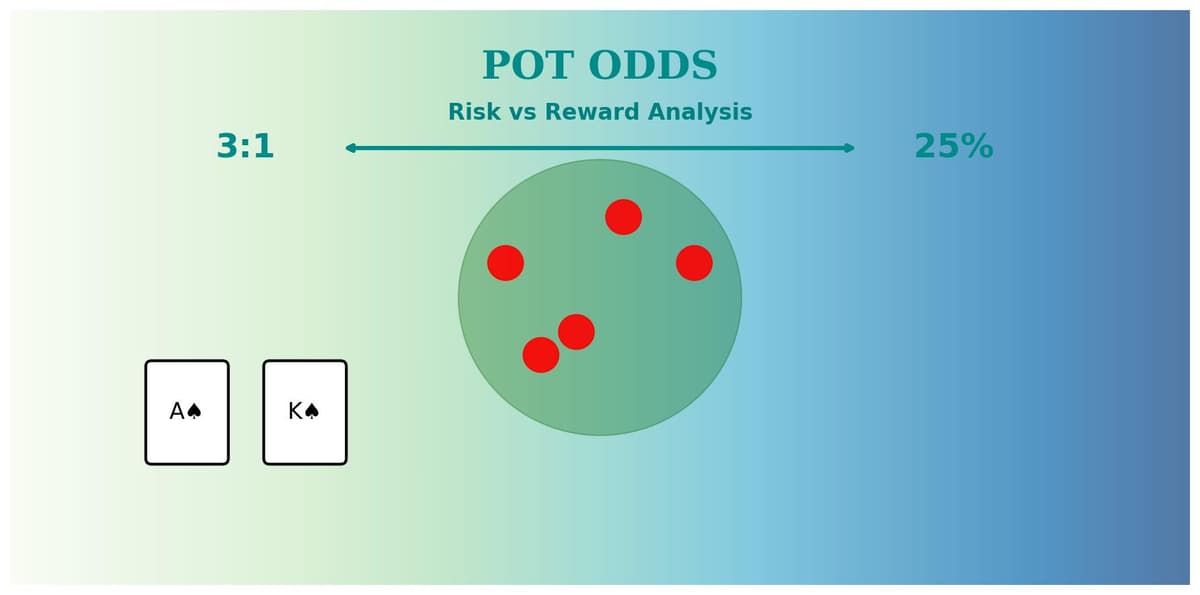
Pot odds are the mathematical foundation of profitable poker decisions. They represent the ratio between the current pot size and the cost of a call, helping you determine whether a call is mathematically profitable. Mastering pot odds is essential for long-term success in poker.
What Are Pot Odds?
Pot Odds Definition: The ratio of the current pot size to the cost of calling a bet.
Formula: Pot Odds = Pot Size : Call Amount
Example:
- Pot: $100
- Bet to call: $20
- Pot odds: $100:$20 = 5:1
This means you're getting 5-to-1 odds on your call.
Basic Pot Odds Calculation
Step-by-Step Process
- Calculate total pot (including opponent's bet)
- Determine call amount
- Express as ratio (pot:call)
- Convert to percentage if needed
Example Calculation
Situation:
- Pot before bet: $80
- Opponent bets: $40
- Your call: $40
Calculation:
- Total pot: $80 + $40 = $120
- Call amount: $40
- Pot odds: $120:$40 = 3:1
- Percentage: 25% (need 25% equity to call)
Pot Odds Reference Table
| Pot Odds | Ratio | Percentage Needed | Common Situations |
|---|---|---|---|
| 1:1 | Even money | 50% | Pot-sized bet |
| 1.5:1 | 3:2 | 40% | 2/3 pot bet |
| 2:1 | 2:1 | 33.3% | 1/2 pot bet |
| 3:1 | 3:1 | 25% | 1/3 pot bet |
| 4:1 | 4:1 | 20% | 1/4 pot bet |
| 5:1 | 5:1 | 16.7% | 1/5 pot bet |
| 6:1 | 6:1 | 14.3% | Small bet |
| 10:1 | 10:1 | 9.1% | Very small bet |
Converting Between Formats
Ratio to Percentage
Formula: Call / (Pot + Call) × 100
Example: 3:1 odds
- Percentage = 1 / (3 + 1) × 100 = 25%
Percentage to Ratio
Formula: (100 - Percentage) : Percentage
Example: 25% equity needed
- Ratio = (100 - 25) : 25 = 75:25 = 3:1
Comparing Pot Odds to Hand Odds
The Decision Rule
Call if: Hand odds ≤ Pot odds Fold if: Hand odds > Pot odds
Example Decision
Your hand: Flush draw (9 outs) Hand odds: 1.9:1 against (35% equity) Pot odds: 3:1 (25% needed) Decision: Call (35% > 25%)
Detailed Pot Odds Scenarios
Scenario 1: Flop Decision
Your Hand: A♠ K♠ Board: 7♠ 5♠ 2♣ Pot: $60 Opponent bets: $30
Analysis:
- Outs: 9 (flush) + 6 (overcards) = 15 outs
- Hand equity: ~54%
- Pot odds: ($60 + $30):$30 = 3:1 (25% needed)
- Decision: Call (54% >> 25%)
Scenario 2: Turn Decision
Your Hand: J♦ T♦ Board: 9♠ 8♥ 2♣ 4♠ Pot: $100 Opponent bets: $75
Analysis:
- Outs: 8 (straight)
- Hand equity: ~18%
- Pot odds: ($100 + $75):$75 = 2.33:1 (30% needed)
- Decision: Fold (18% < 30%)
Scenario 3: River Decision
Your Hand: A♣ A♦ Board: K♠ Q♥ J♦ T♠ 9♣ Pot: $200 Opponent bets: $150
Analysis:
- Hand: Straight (nuts)
- Hand equity: ~100%
- Pot odds: ($200 + $150):$150 = 2.33:1
- Decision: Call (100% >> 30%)
Multi-Way Pot Odds
Adjusting for Multiple Opponents
When facing multiple opponents, you need more equity because:
- More players can have strong hands
- Your outs might be reduced
- Implied odds often decrease
Example: 3-Way Pot
Situation:
- 3 players in hand
- Pot: $90
- First player bets: $30
- Second player calls: $30
- Your action: Call $30
Calculation:
- Total pot: $90 + $30 + $30 = $150
- Your call: $30
- Pot odds: $150:$30 = 5:1 (16.7% needed)
- Adjustment: Need ~25-30% equity due to multiple opponents
Implied Odds
Definition
Implied Odds: The ratio of total expected winnings (including future bets) to the current call amount.
When Implied Odds Matter
- Deep stacks - more money to win
- Strong opponent hands - they'll pay off
- Hidden draws - opponents won't see them coming
- Aggressive opponents - they'll bet/call more
Calculating Implied Odds
Formula: (Current Pot + Expected Future Winnings) : Call Amount
Example: Implied Odds Calculation
Situation:
- Your hand: 7♠ 6♠
- Board: 9♠ 8♥ 2♣
- Pot: $50
- Opponent bets: $25
- Stacks: $200 behind
Direct Pot Odds:
- Pot odds: ($50 + $25):$25 = 3:1 (25% needed)
- Your equity: ~17% (8 outs for straight)
- Direct odds: Not profitable
With Implied Odds:
- If you hit straight, expect to win additional $75
- Implied pot: $50 + $25 + $75 = $150
- Implied odds: $150:$25 = 6:1 (14.3% needed)
- Decision: Call (17% > 14.3%)
Reverse Implied Odds
Definition
Reverse Implied Odds: The additional money you'll lose when you make your hand but still lose the pot.
Common Reverse Implied Odds Situations
- Low flush draws - lose to higher flushes
- Weak straight draws - lose to higher straights
- Set mining - lose to higher sets or flushes
- Dominated draws - hitting gives opponent better hand
Example: Reverse Implied Odds
Your Hand: 6♠ 4♠ Board: A♠ K♠ 2♣ Opponent: Likely has strong hand
Problem: Making flush might lose big pot to higher flush Solution: Discount your implied odds significantly
Advanced Pot Odds Concepts
Fold Equity
When betting or raising, you win immediately if opponent folds.
Formula: (Fold Equity × Pot) + (Call Equity × Expected Value if Called)
Example: Semi-Bluff with Fold Equity
Your Hand: A♠ K♠ Board: 7♠ 5♠ 2♣ Pot: $60 Your bet: $45
Analysis:
- Fold equity: 40% (opponent folds)
- Call equity: 35% (if called, you have 12 outs)
- EV = (0.40 × $60) + (0.60 × 0.35 × $150) = $24 + $31.50 = $55.50
- Decision: Profitable bet
Pot Odds in Different Game Types
No-Limit Hold'em
Characteristics:
- Variable bet sizes
- Stack depth matters
- Implied odds crucial
Strategy:
- Consider future streets
- Adjust for opponent tendencies
- Factor in position
Limit Hold'em
Characteristics:
- Fixed bet sizes
- Easier calculations
- Less implied odds
Strategy:
- More mechanical decisions
- Focus on direct odds
- Drawing hands more profitable
Tournament Play
Characteristics:
- ICM considerations
- Changing stack depths
- Bubble factors
Strategy:
- Adjust for tournament stage
- Consider survival value
- Factor in pay jumps
Common Pot Odds Mistakes
1. Forgetting Opponent's Bet
Wrong: Calculating odds based on pot before bet Right: Include opponent's bet in total pot
2. Ignoring Multiple Streets
Wrong: Only considering current decision Right: Factor in implied odds
3. Overestimating Implied Odds
Wrong: Assuming you'll always get paid Right: Consider opponent's likely actions
4. Underestimating Reverse Implied Odds
Wrong: Ignoring potential losses when hitting Right: Discount equity for dominated hands
Pot Odds Practice Problems
Problem 1: Basic Calculation
Situation:
- Pot: $80
- Opponent bets: $40
- Your hand: Open-ended straight draw (8 outs)
Questions:
- What are the pot odds?
- What equity do you need?
- What's your actual equity?
- Should you call?
Answers:
- 3:1 pot odds
- 25% equity needed
- ~32% equity (8 outs)
- Yes, call
Problem 2: Implied Odds
Situation:
- Pot: $30
- Opponent bets: $20
- Your hand: Pocket 77
- Board: A♠ K♥ 7♣
- Effective stacks: $150
Analysis:
- Direct odds: 2.5:1 (29% needed)
- Your equity: ~85% (set vs likely top pair)
- Implied odds: Excellent (opponent likely has strong hand)
- Decision: Call/raise
Problem 3: Multi-Way Pot
Situation:
- 4 players, pot: $40
- Player 1 bets: $20
- Player 2 calls: $20
- Player 3 folds
- Your hand: Flush draw (9 outs)
Analysis:
- Pot odds: ($40 + $20 + $20):$20 = 4:1 (20% needed)
- Your equity: ~35% heads-up, but ~25% multi-way
- Decision: Call (25% > 20%)
Mental Math for Pot Odds
Quick Calculation Methods
Method 1: Round Numbers
- Pot: $87, Bet: $23
- Round to: Pot $90, Bet $20
- Odds: ~4.5:1
Method 2: Common Ratios
- Learn key percentages: 25%, 33%, 50%
- Corresponding odds: 3:1, 2:1, 1:1
Method 3: Bet Size Shortcuts
- Pot-sized bet = 2:1 odds (33% needed)
- Half-pot bet = 3:1 odds (25% needed)
- Quarter-pot bet = 5:1 odds (17% needed)
Technology and Pot Odds
Poker Software
Training Tools:
- PokerStove - Equity calculations
- Flopzilla - Range vs range equity
- PokerTracker - Hand history analysis
Live Tools:
- Mental math practice
- Odds calculators (for study)
- Range estimation apps
Pot Odds in Live vs Online Play
Live Poker Considerations
Challenges:
- Manual calculations
- Time pressure
- Distractions
Solutions:
- Practice mental math
- Learn common scenarios
- Use betting patterns as shortcuts
Online Poker Advantages
Benefits:
- HUD statistics
- Note-taking
- Hand history review
Cautions:
- Don't rely too heavily on software
- Maintain mental calculation skills
- Understand the math behind the numbers
Advanced Applications
Pot Odds in Bluffing
When bluffing, consider opponent's pot odds:
Example:
- Pot: $100
- Your bluff: $50
- Opponent's odds: 3:1 (25% needed)
- Opponent needs 25% equity to call
- Your bluff succeeds if opponent has <25% equity
Pot Odds and Bet Sizing
Small bets: Give good pot odds, get called more Large bets: Give poor pot odds, get called less
Strategic implications:
- Bet small with strong hands for value
- Bet large when bluffing for fold equity
Conclusion
Pot odds are fundamental to profitable poker play. Key takeaways:
- Always calculate pot odds before making calling decisions
- Compare to your hand equity to determine profitability
- Consider implied odds with deep stacks and strong opponent hands
- Beware reverse implied odds with dominated draws
- Practice mental math for quick live calculations
Master pot odds, and you'll have the mathematical foundation for sound poker decisions. Remember: poker is a game of incomplete information, but pot odds give you the framework to make optimal choices with the information available.
Quick Reference Guide
Essential Pot Odds:
- 2:1 = 33% equity needed
- 3:1 = 25% equity needed
- 4:1 = 20% equity needed
- 5:1 = 17% equity needed
Common Drawing Hands:
- Flush draw: ~35% (needs 1.9:1 or better)
- Straight draw: ~32% (needs 2.1:1 or better)
- Gutshot: ~16% (needs 5.25:1 or better)
Decision Rule: Call when your equity exceeds the percentage required by pot odds.
⚠️ Responsible Gambling Reminder
While understanding poker strategy and mathematics can improve your game, always gamble responsibly. Set limits, take breaks, and remember that poker involves both skill and chance. For support, visit www.problemgambling.ie.
Related Articles
Poker Odds & Outs Explained: Master the Mathematics of Drawing Hands
Complete guide to poker odds and outs calculation. Learn how to count outs, calculate odds, and make profitable decisions with drawing hands in Texas Hold'em.
Understanding Expected Value in Poker: A Complete Mathematical Guide
Master the concept of Expected Value (EV) in poker and learn how to make mathematically profitable decisions at the table. Includes detailed calculations, examples, and practical applications.
Poker Math & Probability: Essential Calculations for Winning Players
Master the fundamental mathematics of poker including pot odds, implied odds, combinatorics, and probability calculations. Essential guide for serious players.