Ireland's gambling landscape is changing fast. With the Gambling Regulatory Authority of Ireland (GRAI) now issuing its first licences under the Gambling Regulation Act 2024, players have more regulatory clarity than at any point in the last century. Alongside this shift, crypto casinos have become one of the fastest-growing corners of the online betting world — offering a different way to deposit, play, and withdraw.
This guide covers where crypto casinos currently stand under Irish regulation, how to tell a safe platform from a risky one, and what to know about coins, bonuses, and payment options before you play.
Can You Use Bitcoin Casinos in Ireland?
Irish law doesn't prohibit using cryptocurrency to fund online betting, and many Irish players already do. But the regulatory picture is less settled than it might first appear.
GRAI's new licensing framework governs traditional online betting and gaming operators, but it doesn't yet contain specific rules for cryptocurrency payments or blockchain-based platforms — an area regulators and operators are still actively working through. Online casino ("remote gaming") licences from GRAI are still rolling out gradually and aren't fully available yet, so for now, Irish players accessing casino-style games are typically using platforms licensed elsewhere in the EU (Malta, Estonia) or in jurisdictions like Curaçao or the UK.
In practice, this means:
- Using Bitcoin, Ethereum, or other crypto to deposit and withdraw at a casino isn't illegal in Ireland
- The casino itself still needs to hold a genuine, valid gambling licence — crypto payment support doesn't substitute for that
- Because GRAI's crypto-specific guidance is still developing, players should expect more clarity — and possibly more rules — in the next year or two
For our full breakdown of how we vet operators, see our trust methodology page.
How to Stay Safe When Betting with Crypto
Crypto payments offer speed and privacy, but they also come with a real risk: transactions can't be reversed. If you send funds to the wrong place or to an unlicensed operator, there's no chargeback and no bank to call. Because of that, it's worth being more careful with crypto casinos than with traditional ones, not less.
Only use casinos that:
- Hold a genuine gambling licence (MGA, Curaçao eGaming, UKGC, or in future GRAI)
- Use SSL encryption to protect your data and payment details
- Offer provably fair games you can independently verify on the blockchain
- Publish clear terms for deposits, withdrawals, and any limits
- Have responsive, reachable support before you deposit — test this early
Why Some Irish Players Choose Crypto Casinos
- Financial privacy: Irish banks sometimes flag gambling-related transactions. Using a separate crypto wallet keeps that activity apart from your main bank accounts.
- Speed: Crypto withdrawals often arrive within an hour, compared with 3–5 business days for some bank transfers.
- Higher limits: Crypto casinos frequently support larger deposits and withdrawals than card or bank-based options.
- Provably fair gaming: Blockchain-based verification lets you check that game outcomes weren't manipulated.
None of this makes crypto casinos inherently safer than traditional ones — it makes them different. The licence and the operator's track record still matter more than the payment method.
What Sets Reliable Crypto Casino Operators Apart
Choosing a crypto casino isn't just about flashy bonuses or trendy branding. Look for platforms that:
- Support multiple established cryptocurrencies, not just one
- Publish transparent, verifiable blockchain transaction records
- Keep the majority of player funds in cold storage, with only operational amounts in hot wallets
- Combine crypto features with the same standards you'd expect from any licensed, well-run casino
How to Find a Safe Bitcoin Casino
- Check the licence. Look for MGA, Curaçao eGaming, or UKGC registration — and verify it directly on the regulator's own site, not just the casino's footer badge.
- Check the software providers. Stick to well-known game studios such as Evolution or Pragmatic Play.
- Read the terms. Pay close attention to withdrawal limits and wagering requirements before you deposit.
- Check community reputation. Look for independent reviews and forum discussion confirming the casino actually pays out on time.
Comparing Crypto Payment Options
Not all cryptocurrencies work the same way at online casinos. Speeds, fees, and acceptance vary — figures below are typical ranges, not guarantees, and will vary by casino and network conditions:
| Cryptocurrency | Typical Transaction Speed | Typical Network Fees | Acceptance at Casinos | Best For |
|---|
| Bitcoin (BTC) | 10–60 minutes | Variable, often $1–$15 | Highest | Larger transactions |
| Ethereum (ETH) | 1–5 minutes | Variable, often $0.50–$8 | Very high | Faster, smaller plays |
| Litecoin (LTC) | 2–5 minutes | Typically under $0.20 | High | Frequent small transactions |
| Bitcoin Cash (BCH) | 2–15 minutes | Typically under $0.10 | Moderate | Cost-conscious players |
| Tether (USDT) | 1–10 minutes | Low, often $1–$3 | High | Avoiding price volatility |
Stablecoins like USDT are worth a specific mention: because their value is pegged rather than floating, they remove the price-swing risk that comes with holding BTC or ETH between depositing and withdrawing. If you'd rather your gambling stakes not double as a currency bet, a stablecoin is usually the simpler choice.
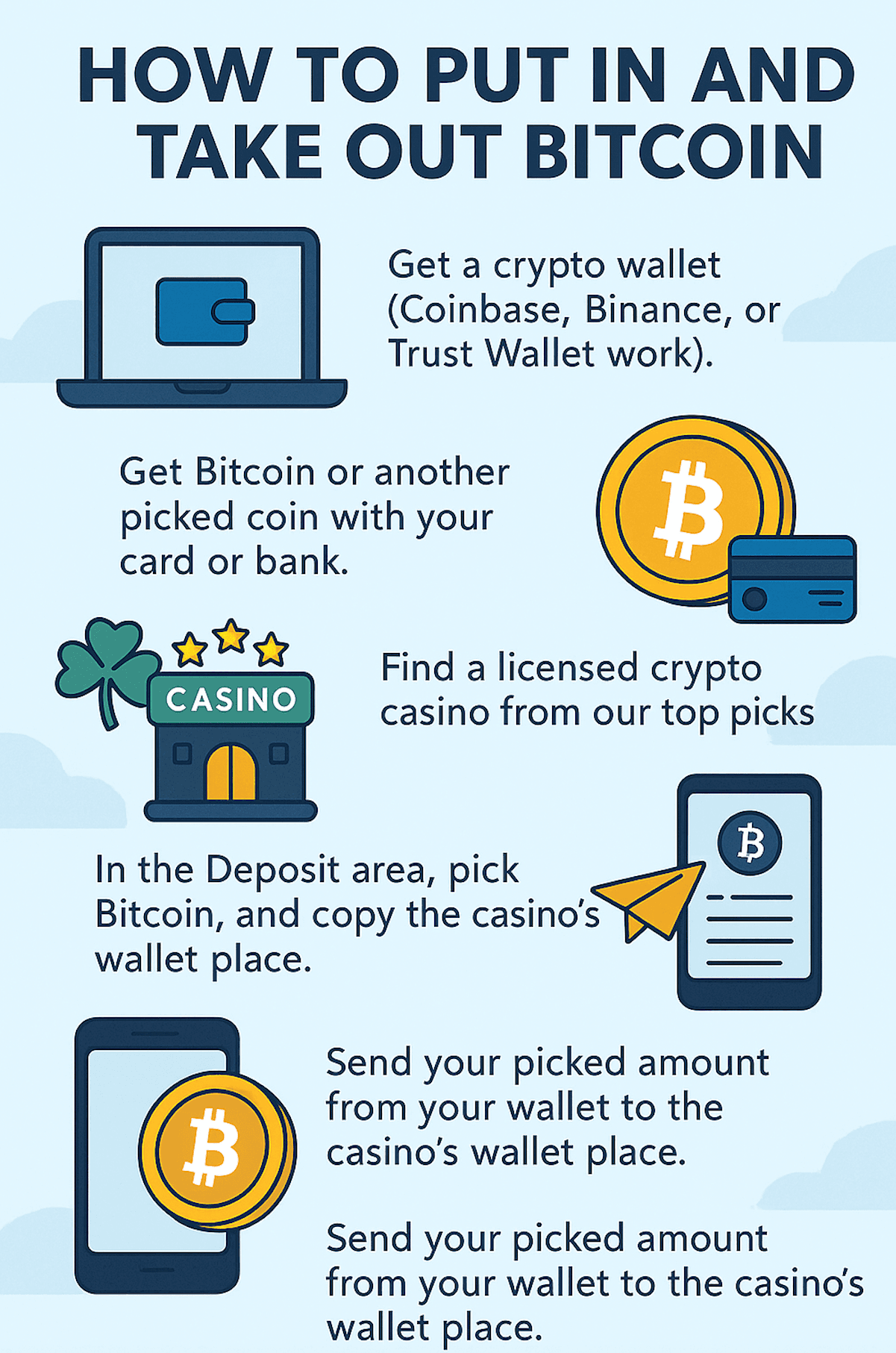
How to Deposit and Withdraw Bitcoin
1
Get a crypto walletDownload a reputable wallet or exchange app (e.g. Coinbase, Binance, Trust Wallet). Verify your identity and enable two-factor authentication.
2
Buy cryptocurrencyUse a debit card or bank transfer to purchase BTC, ETH, or another supported coin.
3
Choose a licensed casinoSelect a properly licensed crypto casino and create your account, completing any identity checks required.
4
Deposit and playCopy the casino's wallet address from the cashier section, send funds from your wallet, and confirm the deposit before playing.
Crypto Casino Bonuses and Promotions
Crypto casinos often structure promotions differently from traditional ones. A few things to know before chasing a bonus:
- Deposit matches sometimes vary by coin. A casino might offer a larger match percentage on one cryptocurrency than another, reflecting processing costs or the operator's own preferences.
- Wagering requirements are common — typically somewhere in the 25x–40x range, though this varies significantly by casino and should always be checked directly in that casino's terms rather than assumed.
- Some casinos let you wager in your deposited cryptocurrency rather than converting to fiat, which avoids forced conversion — useful if you're already holding a coin you don't want to cash out.
- Cashback offers paid in crypto carry the same price-movement consideration as any crypto holding: the value of what you're paid back can shift before you use it.
As always, treat any bonus figures you see quoted, here or on a casino's own site, as subject to change — confirm current terms directly with the operator before depositing. You can browse current offers on our top bonuses page.
Bitcoin vs PayPal for Irish Players
| Feature | Bitcoin | PayPal |
|---|
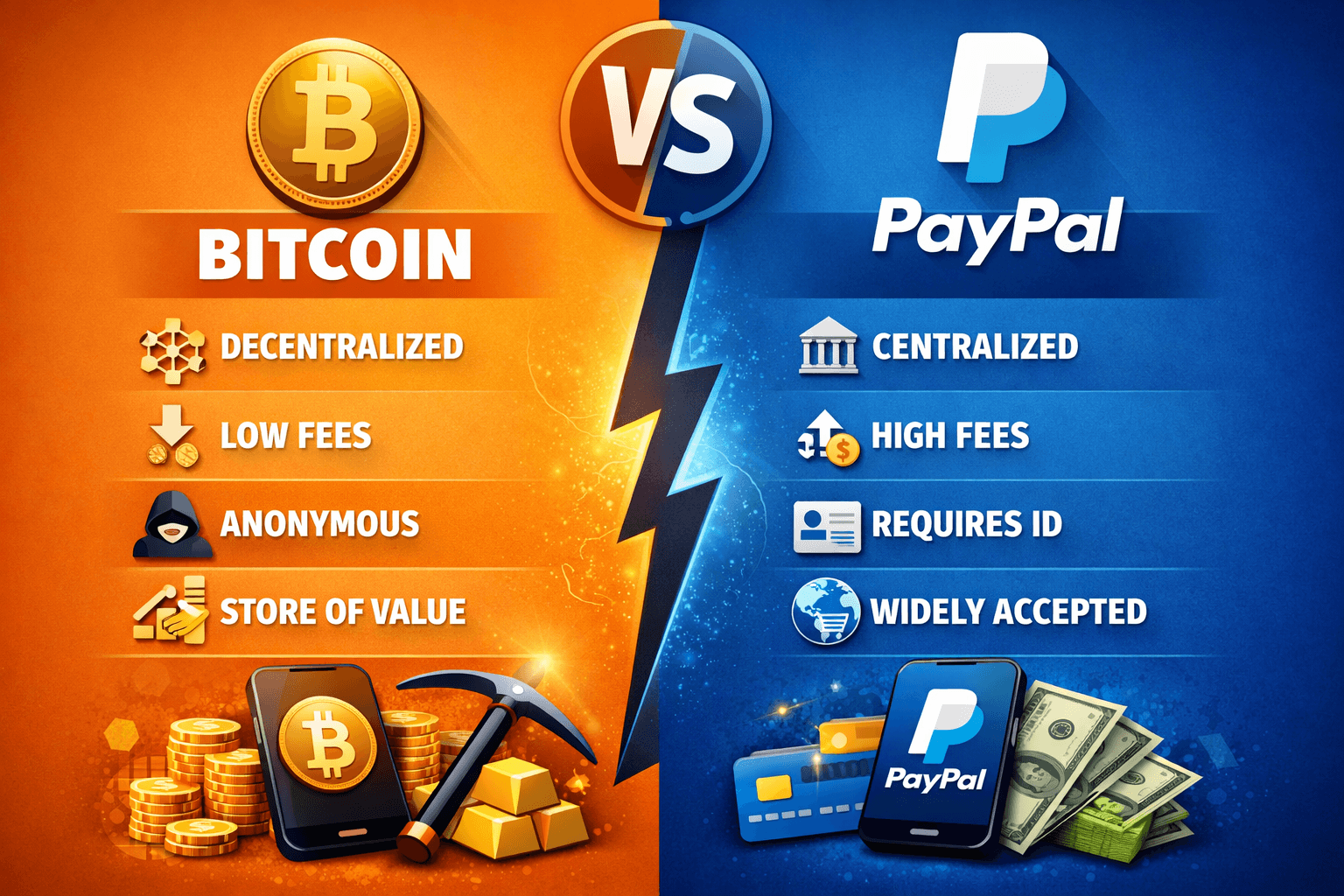
| Acceptance | Growing steadily | Widely accepted |
| Deposit speed | 10–30 minutes | Instant |
| Withdrawal speed | Often 1–2 hours | Often 24–48 hours |
| Privacy | Higher — no bank transaction logs | Moderate — linked to bank/card info |
| Chargeback protection | None — transactions are final | Available under PayPal's own policies |
| Typical use case | Privacy-focused players comfortable with crypto | Players who want simplicity and broad support |
Neither option is objectively "better" — it depends on what you're optimising for. If you want speed and privacy and you're comfortable managing a wallet, Bitcoin fits. If you want the simplicity of an account you already use everywhere else, PayPal fits.
For more payment comparisons, see our guides to PayPal casinos, Skrill, and Neteller.
Regulation and Tax: What Irish Players Should Understand
GRAI's licensing framework doesn't yet contain specific provisions for cryptocurrency gambling, which leaves crypto-native platforms in a space regulators and legal advisors are still working through. That's not the same as crypto casinos being officially sanctioned or endorsed — it means the responsibility currently sits with the player to choose a properly licensed platform and understand that the rules around crypto-specific gambling may still develop.
Tax treatment of gambling winnings — in crypto or fiat — can depend on your individual circumstances, and cryptocurrency tax rules in Ireland are themselves evolving. We'd strongly recommend speaking with a tax professional familiar with both gambling income and cryptocurrency before assuming any winnings are tax-free, rather than relying on general guidance like this article.
A Note on Crypto Price Volatility and Gambling
Because cryptocurrency values move independently of anything happening at the casino, it's worth being clear-eyed about one thing: any change in the value of your crypto holdings is a currency market outcome, not a gambling outcome. If Bitcoin's price rises while you're holding winnings in BTC, that's separate from — and unrelated to — the odds of the games you played.
We'd caution against treating deposit or withdrawal timing as a "strategy" for beating the market, or treating jackpot payouts denominated in a volatile coin as a security blanket against losses. If you don't want your gambling outcome tied to crypto price swings, converting to a stablecoin or fiat promptly is the simpler, lower-risk choice.
Final Thoughts
Crypto casinos are becoming a normal part of Ireland's online gambling landscape, and cryptocurrency payments offer real advantages — faster transactions, greater privacy, and provably fair verification among them. But the regulatory picture for crypto-specific gambling is still forming, and crypto's price volatility adds a layer of risk that traditional payment methods don't carry.
The fundamentals don't change: choose a properly licensed, reputable operator, understand the terms before you deposit, and treat gambling as entertainment rather than a way to grow savings. If gambling stops being fun or starts to feel out of control, support is available at GamblingCare.ie.
For our full evaluation criteria, visit our trust methodology page.