The History of the Curragh Racecourse, Ireland's Home of Flat Racing
From 3rd-century chariot legends to a €81.2m redevelopment — the story of the Curragh, home of all five Irish Classics.
The Curragh: Ireland's Oldest Racing Ground
The Curragh is more than a racecourse. It's a 5,000-acre open plain in County Kildare, about 30 miles west of Dublin, and it has been tied to horses, armies and Irish history for centuries. The racecourse sits on the northern edge of that plain, but the whole area shares the same story.
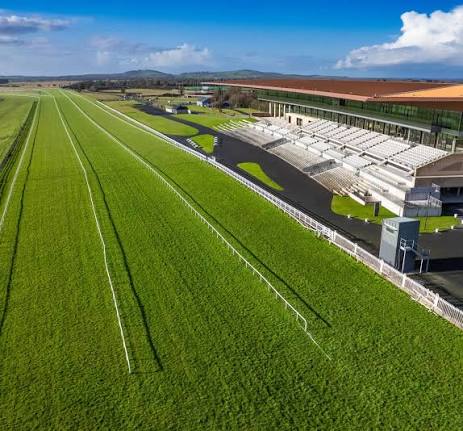
Long before the modern grandstand or the Irish Classics, this open grassland was already shaping Ireland's sporting identity. The recorded story runs from folklore to one of Europe's leading flat-racing venues. For Festival and fixture context, see our horse racing betting guide and the September and October Irish racing fixtures lists.
Myth, Legend and the Earliest Racing on the Plain
The word "Curragh" is generally translated as either "the place of the running horse" or, more simply, "racecourse" — published sources differ slightly on the exact translation, though both point to the same idea: this has been horse country for a very long time.
Irish folklore places the legendary warrior Fionn MacCumhaill and his men racing horses across the plain from the nearby Hill of Allen. Other tales describe 3rd-century kings and chieftains racing chariots here, and a 5th-century King of Leinster granting St. Brigid all the land her cloak could cover — a cloak said to have stretched right across the Curragh. These stories mix myth and history, but archaeologists have found gathering sites and settlement traces on the plain that match a very long relationship between this land, horses and ceremony.
By the 1600s, that folklore had turned into organised sport. Records show 17th-century noblemen staging match races here, pitting one horse against another over a 4-mile course — an early version of the "Sport of Kings" reputation the Curragh still carries.
From Match Races to a Governing Body
| Year | Milestone |
|---|---|
| 1727 | First recorded race meeting at the Curragh |
| 1760s | Irish Turf Club founded in Kildare, becoming racing's governing body nationally |
| 1866 | First Irish Derby run; won by Lord of the Isles |
| 1865 | Parliamentary commission set up to examine the Curragh's competing uses |
| 1868 | Curragh of Kildare Act passed, protecting the plain for racing and training |
If you're tracing Irish racing history, the Curragh and the Irish Turf Club grew up together — the Club's rules and officials are what turned the Curragh's match races into the structured sport seen today.
The 1868 Curragh of Kildare Act
By the mid-1800s, the Curragh was being used for grazing, military training and racing all at once, and Parliament stepped in. A commission examined the plain's future in 1865, and the result was the 1868 Curragh of Kildare Act, which settled rights of common pasture and preserved the land specifically for horse racing and training. That legal protection is a big part of why the plain still looks much as it always has.
Cavalry regiments also trained here before the Crimean War, the Boer War and the First World War, and nearly 200 archaeological monuments have been identified across the plain, which is now protected as a Special Area of Conservation.
Home of the Irish Classics
All five of Ireland's flat-racing Classics are run at the Curragh, across 23 race days and 11 Group 1 contests between late March and early November.
| Classic | Month |
|---|---|
| Irish 2,000 Guineas | May |
| Irish 1,000 Guineas | May |
| Irish Derby | June |
| Irish Oaks | July |
| Irish St Leger | September |
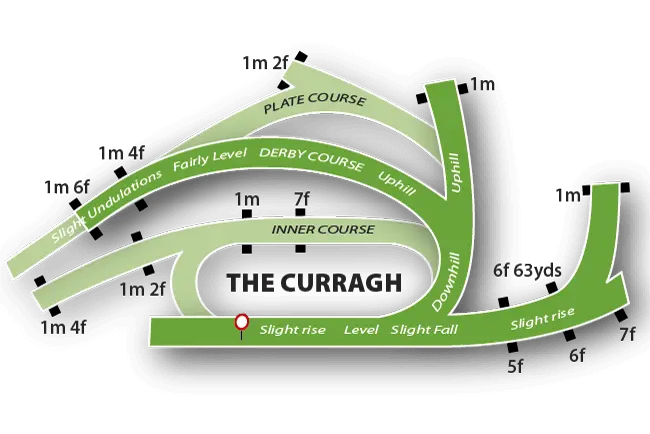
The Irish Derby, first run in 1866, has become a genuinely global fixture — Nijinsky won it in 1970 as part of his English and Irish Derby double, and later Derby winners Galileo, Camelot and Australia kept that tradition alive.
Champions Bred on Curragh Turf
The Curragh doubles as the nursery for Irish flat racing, feeding success at Royal Ascot, the Breeders' Cup and the Arc. Sadler's Wells won the 1984 Irish 2,000 Guineas here before shaping modern breeding as a stallion. Galileo took the 2001 Derby and became one of the world's most important sires. Enable powered clear in the 2017 Irish Oaks on her way to greatness, and Alpha Centauri produced one of the strongest three-year-old filly seasons in recent memory after winning the 2018 1,000 Guineas.
The Training Grounds
Around the track sit 1,500 acres of training grounds, with more than 70 miles of turf gallops, 12 miles of peat gallops and eight all-weather surfaces. The Old Vic woodchip gallop, run over nine furlongs, is one of the best known and is often used to sharpen stayers. The open, exposed nature of the plain — wind, rain, cold and sun all year round — is often credited with toughening up Irish-trained horses before they travel abroad.
The 2019 Redevelopment
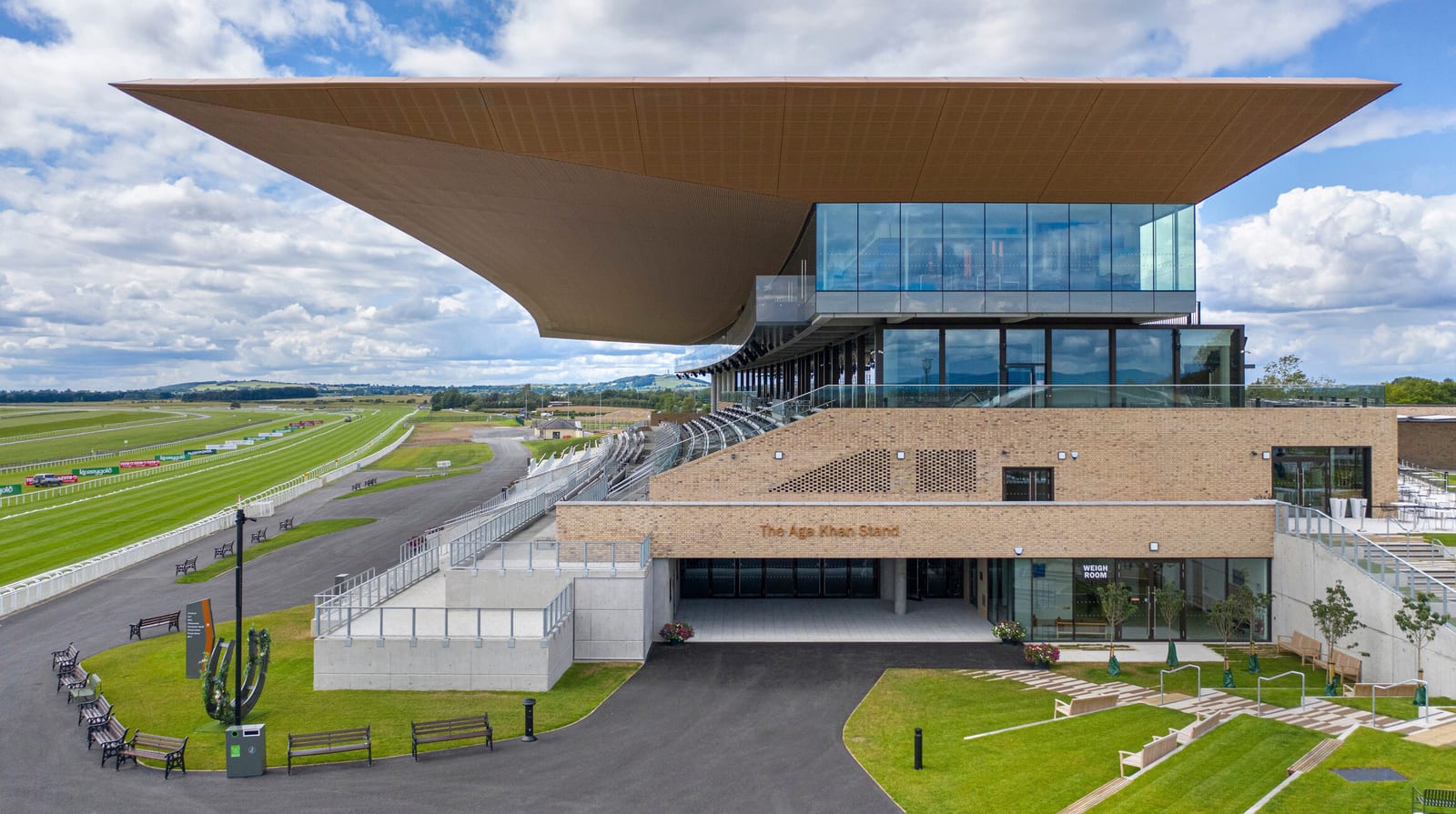
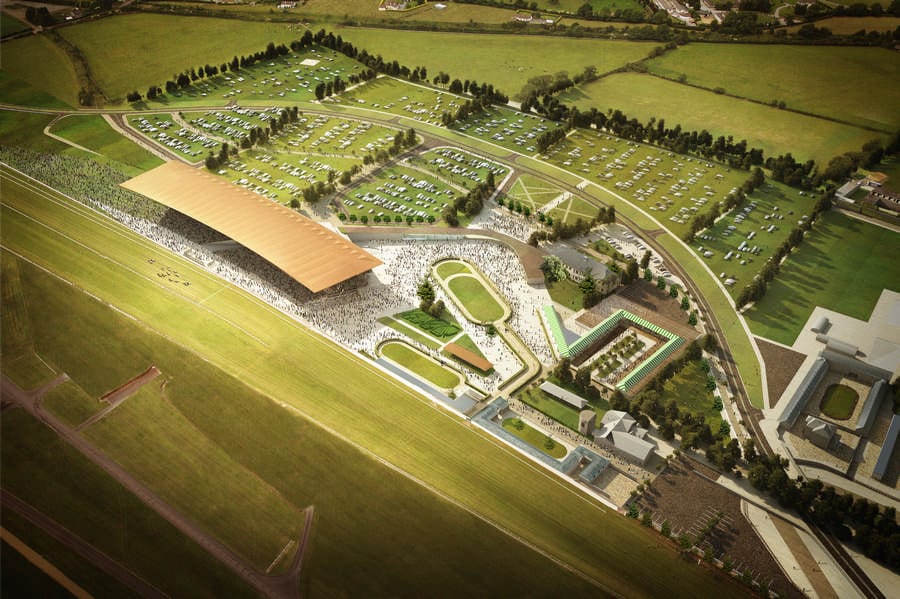
Between 2017 and 2019, the Curragh underwent a major rebuild designed by Grimshaw Architects, completed in spring 2019 at a final cost of approximately €81.2 million.
| Detail | Information |
|---|---|
| Architect | Grimshaw Architects |
| Final cost | Approx. €81.2 million |
| Completion | Spring 2019 |
| Grandstand | 10,500m², four levels |
| Grandstand capacity | 6,000 (up to 30,000 across the grounds) |
| Roof | Cantilevered, 45-metre overhang |
| Stable yard | 135 stables |
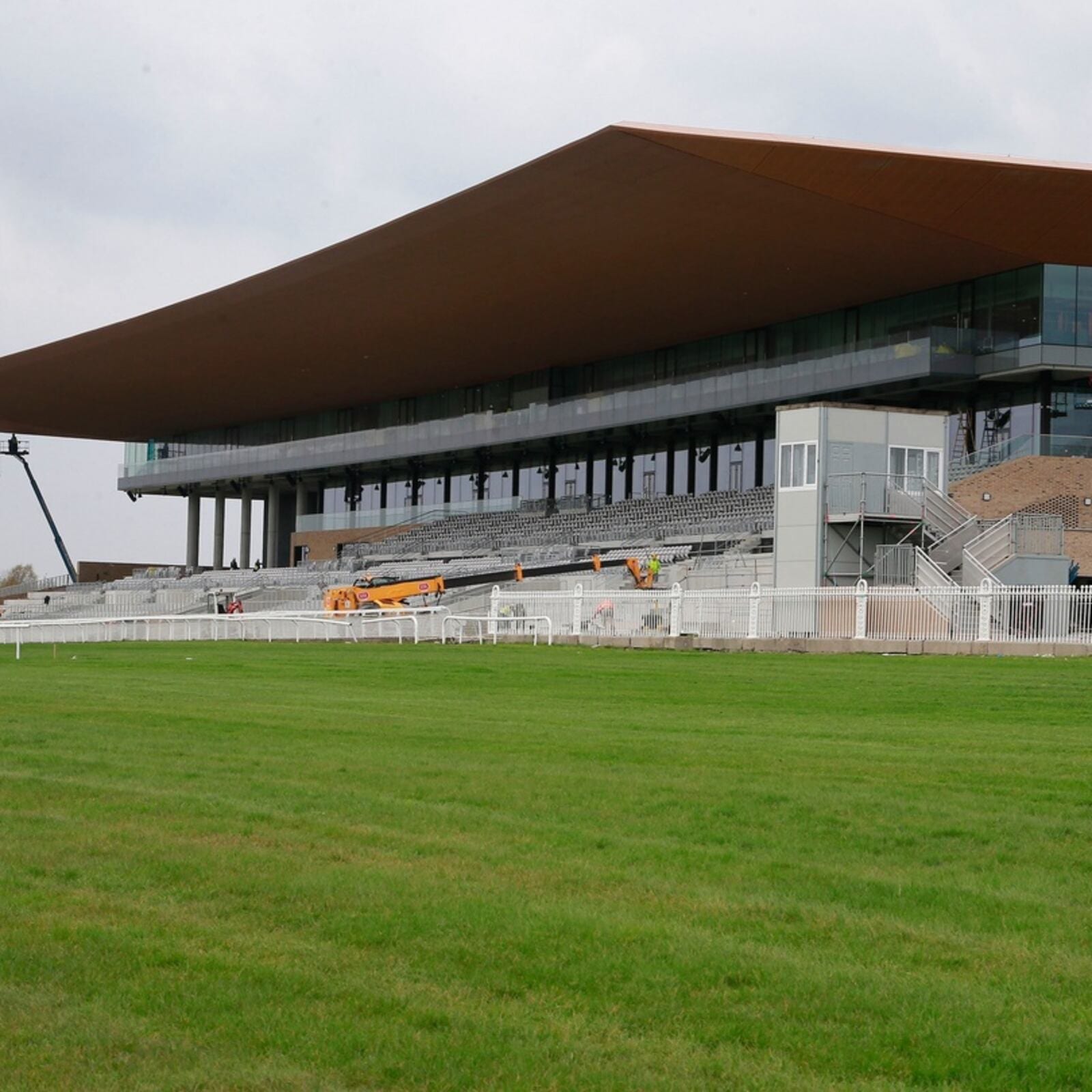
The new grandstand's roof was designed to echo the undulating landscape of the plain itself, and the arrivals reception now houses a museum dedicated to the history of Irish horse racing. Race days continued through the build using temporary facilities, so the season's rhythm was never interrupted.
How We Compiled This History
This article draws on published background on the Curragh's origins, its 1727 first meeting and the 1868 Act, a Smithsonian American History Museum object description of an 1867 print of the racecourse, and reported figures on the 2019 redevelopment. Where sources gave slightly different wording for the same fact — such as the translation of "Curragh" — we've noted both rather than presenting one as definitive. See our trust methodology.
Records, Recent Form and Visiting the Curragh
Johnny Murtagh and Mick Kinane are widely named among the Curragh's leading riders by career wins. We have not confirmed official totals from the Curragh or the Turf Club, so we are not publishing a ranked figure here.
The Curragh Cup, while not one of the five Classics, is a regular feature-race highlight:
| Date | Horse | Jockey | Trainer |
|---|---|---|---|
| 19 Jul 2026 | Trustyourinstinct (IRE) | D P McDonogh | Joseph O'Brien |
| 19 Jul 2025 | Al Riffa (FR) | Dylan Browne McMonagle | Joseph O'Brien |
| 20 Jul 2024 | Tower of London (IRE) | Ryan Moore | A P O'Brien |
| 22 Jul 2023 | Emily Dickinson (IRE) | Ryan Moore | A P O'Brien |
| 24 Jun 2022 | Camorra (IRE) | C T Keane | G M Lyons |
| 27 Jun 2021 | Amhran na bhFiann (IRE) | C T Keane | A P O'Brien |
For a closer look, Horse Country runs a behind-the-scenes tour of the Curragh, with access to areas normally reserved for racing professionals, including the jockeys' changing room and stable yard.
Curragh Racecourse FAQ
When was the first race held at the Curragh?
The first recorded race meeting took place in 1727, though the plain has folklore ties to horse and chariot racing going back much further.
What does "Curragh" mean?
Sources differ slightly — it's generally translated as either "the place of the running horse" or simply "racecourse."
What was the 1868 Curragh of Kildare Act?
Following a parliamentary commission set up in 1865, the Act settled rights of common pasture and protected the plain specifically for horse racing and training.
Which Classics are run at the Curragh?
All five Irish flat-racing Classics: the Irish 2,000 Guineas, Irish 1,000 Guineas, Irish Derby, Irish Oaks and Irish St Leger.
How much did the 2019 redevelopment cost?
Approximately €81.2 million, for a project designed by Grimshaw Architects that included a new grandstand, a 45-metre cantilevered roof and a 135-stable yard complex.
Who holds the record for most wins as a jockey at the Curragh?
Murtagh and Kinane are often named among the track's leading riders. We have not confirmed official career-win totals from the Curragh, so we do not list a record figure here.
Can you visit behind the scenes at the Curragh?
Yes — Horse Country offers a guided tour with access to areas such as the jockeys' changing room and stable yard, bookable in advance.
Sources
Drawn from published Curragh history, a Smithsonian object record of an 1867 print, and Horse Country's tour details.
- 1The Curragh — course, Classics and raceday information
- 2Smithsonian National Museum of American History — object description of an 1867 print of the Curragh Race Course
- 3Horse Country — behind-the-scenes Curragh tour details
- 4Irish Lucky — horse racing betting — odds, each-way and Irish-facing books
- 5Horse Racing Ireland September fixtures — September HRI list, including the Curragh
- 6Horse Racing Ireland October fixtures — October HRI list, including the Curragh
Page Updates
Checked historical dates, redevelopment figures and recent Curragh Cup results against published sources.
Affiliate disclosure. Irish Lucky may earn a commission if you sign up through our links. That does not change our scores. Always read the operator's promotional T&Cs (18+). Play responsibly — responsible gambling.
Highlights
Sum It Up
- The first recorded race meeting at the Curragh dates to 1727, and folklore places horse racing on the plain as far back as the 3rd century
- The 1868 Curragh of Kildare Act protected the plain for racing and training after a parliamentary commission examined its future in 1865
- The Curragh hosts all five Irish Classics, including the Irish Derby, first run in 1866
- A €81.2m redevelopment by Grimshaw Architects, completed in spring 2019, added a new grandstand seating 6,000 with a 45-metre cantilever roof
- Horse Country runs a behind-the-scenes Curragh tour, including the jockeys' changing room and stable yard
The Curragh in County Kildare has hosted racing since at least 1727 and remains the home of all five Irish flat-racing Classics.
⚠️ Responsible Gambling Reminder
While bonuses can boost your play, always gamble responsibly. Set limits, take breaks, and remember that bonuses aren't guaranteed wins. For support, visit www.problemgambling.ie.
About the Author
Seamus O'Connor
Senior Casino Analyst with over 8 years of experience in the Irish gambling industry. Seamus specializes in bonus analysis and player protection.