Ireland’s gambling laws changed more in 2024–2026 than in the previous century. The Gambling Regulation Act 2024 creates a single regulator — the Gambling Regulatory Authority of Ireland (GRAI) — and phases out the old Revenue Commissioners betting licences. This page is a player-facing summary of what is law, what has commenced, and what is still coming. It is not legal advice. For day-to-day player questions — is it legal, who is GRAI, what changes if you already play — see Irish gambling laws for players. For how we compare MGA, UKGC and GRAI badges on casinos, use licensed casinos. For whether any online casino holds a GRAI gaming licence yet, see GRAI casinos. For a live betting-vs-gaming calendar, see the GRAI licence tracker.
How this page is compiled
Facts below are taken from GRAI publications, the Department of Justice commencement-order press release (3 February 2026), and A&L Goodbody’s December 2024 guide to the Act. Where a 2024 law-firm timetable disagrees with the 2026 ministerial dates, we follow the later official release. Irish Lucky may earn a commission from casino links elsewhere on the site; that does not change this legal summary. 18+.
How We Treat GRAI vs Offshore Licences
Credit-card and buy-now-pay-later bans, and the VIP/loyalty-programme ban, apply to GRAI-licensed operators. They do not automatically apply to every MGA or UKGC casino that still serves Irish players. The National Gambling Exclusion Register (Section 45) is still in development and not yet live. We do not treat a “GRAI casino licence” claim as true while remote gaming (online casino) licences have not been issued — see GRAI casinos, licensed casinos and our trust methodology.
Until 2024, licensing sat across old statutes, mainly the Totalisator Act 1929 and the Betting Act 1931, with the Office of the Revenue Commissioners issuing betting permissions. The Gambling Regulation Act 2024, signed on 23 October 2024, repeals that patchwork and puts one independent authority in charge of online and in-person gambling.
The National Lottery is outside the Act. It stays under the National Lottery Act 2013 and is exempt from the GRAI advertising watershed.
The Gambling Regulation Act 2024: Key Dates
23 October 2024 — Act signed into law.
1 January 2025 — Betting duty / remote betting duty set at 2% of turnover on relevant bets by Irish customers; remote betting intermediaries pay 25% on commissions.
3 February 2026 — Minister for Justice Jim O’Callaghan signs the commencement order.
5 February 2026 — Order takes effect. GRAI can accept applications and issue remote and in-person betting licences. The Totalisator Act 1929 and Betting Act 1931 are repealed.
9 February 2026 — GRAI begins accepting remote betting licence applications through its online portal.
1 December 2026 — In-person operators must hold a GRAI licence as existing Revenue retail betting licences expire.
5–20 August 2026 — GRAI public consultation on three draft regulations (prescribed games, records/accounts, remote account-holder information), closing 3pm, 20 August 2026.
Remote betting
GRAI began issuing remote betting licences on 1 July 2026. This first wave is betting, not online casino (remote gaming).
In-person betting
Must be GRAI-licensed from 1 December 2026, when remaining Revenue retail licences expire.
A December 2024 A&L Goodbody note still listed older Revenue renewal dates (30 June 2025 remote / 30 November 2025 retail). The February 2026 Department of Justice release is the timetable we use for the GRAI switchover.
The GRAI board has seven members, including a chair, appointed by the Minister for Justice after a Public Appointments Service competition. Membership must include at least three men and three women. Required backgrounds include legal/compliance, gambling, consumer affairs, addiction treatment, ICT, and financial/audit work. Not every GRAI function is commenced yet.
Who Licenses What
GRAI — licenses and supervises B2C, B2B and charitable gambling as each category goes live; runs a public register; owns advertising/sponsorship rules, the Exclusion Register (in development, not yet live), the Social Impact Fund, complaints, and AML supervision under the Criminal Justice (Money Laundering and Terrorist Financing) Act 2010.
Revenue Commissioners — held in-person betting licences until they expire on 1 December 2026.
Offshore operators — anyone offering gambling to Irish customers needs an Irish B2C licence for that activity, regardless of an MGA, UKGC or other foreign badge. GRAI can ask the courts to block sites and related bank transactions.
Until remote gaming licences exist, Irish players still use offshore-licensed casinos. That distinction is spelled out on GRAI casinos, licensed casinos and the GRAI tracker.
How to Check If an Operator Is Properly Licensed
1
Use the GRAI register
GRAI’s job includes a public register of licensed operators. Confirm a B2C betting, gaming or lottery licence on grai.ie — do not trust a footer badge alone.
2
Know which product is live
Remote betting licences opened in 2026. A GRAI badge on an online casino is not credible until remote gaming licences are actually issued.
3
Look for a segregated customer account
B2C licensees must ring-fence player money in a Segregated Customer Account, separate from operating funds.
4
Check the Exclusion Register
The National Gambling Exclusion Register (Section 45 of the Act) is still in development and not yet live. It is expected to launch alongside the licensing rollout. Once live, remote B2C licensees must query it in real time — if they cannot, they must suspend gambling activity.
5
Watch the cashier
GRAI licensees cannot take credit cards (including e-wallets loaded from a credit card), buy-now-pay-later gambling payments, or extend credit. See our payments hub for debit and e-wallet options.
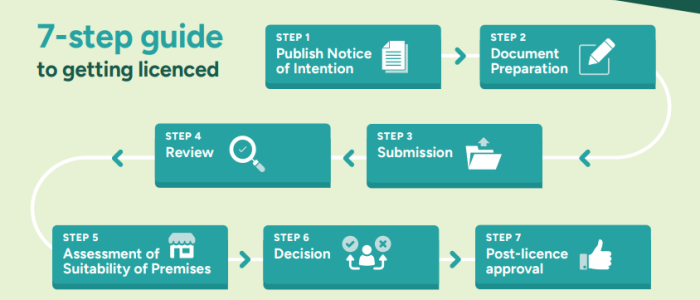
Operators applying for a licence must name the business, list previous gambling licences, and put “relevant officers” and beneficial owners through a fit-and-proper test (no undischarged bankruptcy, valid tax clearance). Remote B2C applicants also file software and hardware details. The Act does not fix a clock; industry notes expect at least two to three months. GRAI licence fees are not set yet (Minister for Justice consent required). Under the outgoing Revenue regime, remote application fees were €10,000, with renewals €10,000–€200,000 every two years by turnover.
Licence Types and Key Conditions
GRAI oversees three categories, for in-person and remote activity:
B2C (gaming, betting and lottery) — required for any operator serving Irish customers, wherever it is based and whatever foreign licence it holds. Applicants specify the games, lotteries or pool-betting events they will offer.
B2B — “gambling products” (machines, equipment, software) and “gambling related services” (odds, hosting, support, fraud/risk, holding customer funds, installing or upgrading software). It applies to firms that supply Irish B2C licensees and to B2B firms located in Ireland even if they do not supply Irish licensees.
Charitable / philanthropic — sports clubs, community groups and charities fundraising through gambling.
Limited exemptions: one-off charitable lotteries with total prizes up to €2,000 (other conditions apply); product-linked lotteries with prizes up to €5,000.
B2C snapshot
Must show capacity to pay winnings. Remote applicants document IT and GRAI technical standards. Officers and owners must be fit and proper.
B2B snapshot
Certificate of compliance with published technical standards. Lead-in after standards are published: six months for software, three years for gaming machines.
B2C conditions in the Act include:
Stake and prize caps (GRAI may vary these by regulation): €10 maximum payment-in for lotteries and games; €3,000 winnings cap on games; €5,000 per week for periodical lotteries; €360,000 for one-off lotteries.
No credit — no credit-card or buy-now-pay-later gambling payments, including electronic payments loaded from a credit card, and no credit facilities to players.
Inducements — VIP/loyalty programmes for high-volume gamblers are prohibited; promotions open to everyone remain allowed.
Children and branding — branded merchandise must not be intended for children (this merchandise rule starts one year after commencement). Sponsorship of events aimed mainly at children is prohibited.
Segregated Customer Accounts and change-of-control / remote-tech notifications to GRAI.
Exclusion Register checks for remote B2C (once the register is live).
On a GRAI-licensed site, plan to deposit with debit, e-wallet or another permitted method — not a credit card or buy-now-pay-later product. Compare options on payments.
Legal Gambling Age
The materials we compiled prohibit allowing a child to gamble or to be employed by a licensee, and they require safeguards so children cannot access gambling places or services. They do not state a numeric minimum age. Irish Lucky’s own pages are 18+. GRAI has worked with HSE Addiction Services on family advice for spotting underage gambling. Licensed operators still run ID and address checks before meaningful deposits or withdrawals — casino KYC verification covers what that looks like for a player.
Advertising and Sponsorship
Watershed: no gambling ads on TV, radio or on-demand audiovisual media between 5:30am and 9:00pm. Charitable licensees are exempt if the ad carries no B2C/B2B branding. The National Lottery is not under this restriction.
Streaming / on-demand: ads only to people who have an account with that service, with an exception for incidental logos at a sporting event.
Social and video platforms: ads only where the recipient has an account and follows or subscribes to the licensee.
Email and SMS: prior consent and an easy opt-out.
Content: must not target children, encourage excessive gambling, or mislead about social or financial benefits. ASAI and broadcasting/online-safety codes still apply.
Penalties for Illegal Gambling
Powers largely commenced from 5 February 2026:
Administrative fines up to €20 million or 10% of turnover, whichever is greater, with Circuit Court approval.
Non-compliance notices, and court applications to suspend or revoke a licence.
Search and seizure, including warrants for a private dwelling where needed.
Court orders against operators and third parties (banks, ISPs, app stores), including emergency blocks on websites or transactions.
Summary prosecutions within three years of an alleged offence.
Breach of Exclusion Register rules (for example letting a self-excluded person play, taking their payment, or marketing to them): up to five years’ imprisonment and/or a fine.
Betting duty / remote betting duty: 2% of turnover on relevant Irish-customer bets from 1 January 2025.
Remote betting intermediaries: 25% on commissions.
E-gaming: generally 23% VAT on retained stakes from Irish customers.
Lottery tickets: VAT-exempt.
Social Impact Fund: annual turnover-based contribution from B2C and B2B (not charitable) licensees, for research, education and treatment.
GRAI is government-funded for an initial three years, then self-funded via licensee charges.
Player Protection and Problem Gambling
The National Gambling Exclusion Register (Section 45 of the Gambling Regulation Act 2024) is still in development and not yet live. It is expected to launch alongside the licensing rollout. Once live, it will be GRAI’s online self-exclusion list for GRAI-licensed bodies: licensees must refuse registration and payments and must not send marketing that encourages gambling. Remote operators will check the register in real time. Until then, self-exclusion has to be set at each casino individually — see responsible gambling tools.
Other Act tools: player-set monetary limits; alerts on wins, losses and time spent; access to gambling history; suspicious-activity reports to GRAI; child-protection duties for remote gambling; account-closure and refund rules.
If gambling is no longer entertainment, use operator-level self-exclusion today and our responsible gambling page for Irish support. Join the National Gambling Exclusion Register when it launches so GRAI-licensed operators cannot take you on.
What Is Still Coming
GRAI licence fees and, after three years, self-funding charges.
Published technical standards (six-month software / three-year machine lead-in).
Outcome of the August 2026 consultation (Sections 86, 152 and 173).
Full in-person betting licensing from 1 December 2026.
The National Gambling Exclusion Register (Section 45) — in development, not yet live; expected to launch alongside the licensing rollout.
Branded-merchandise child rule, one year after commencement.
Remote gaming (online casino) licences — not in the first betting wave; follow the GRAI tracker rather than a casino homepage claim.
The Gambling Regulatory Authority of Ireland is the independent statutory body created by the Gambling Regulation Act 2024 to license and regulate gambling offered to Irish customers, online and in person.
When did the 2024 Act come into force?
It was signed on 23 October 2024. Key licensing and enforcement provisions commenced from 5 February 2026 after a ministerial order.
Do online casinos already need a GRAI licence?
The first live wave is betting (remote from 1 July 2026, in-person from 1 December 2026). Remote gaming (casino) licences have not been issued in that wave. Treat a “GRAI casino licence” claim with scepticism and check GRAI casinos.
Is the National Lottery covered?
No. It stays under the National Lottery Act 2013 and is exempt from the GRAI advertising watershed.
Can operators advertise on Irish TV?
Yes, but not between 5:30am and 9:00pm on TV, radio or on-demand audiovisual media. Charitable ads are exempt if they carry no B2C/B2B branding.
Are credit cards allowed?
Not at GRAI-licensed operators. Credit-card payments — including electronic payments loaded from a credit card — and buy-now-pay-later gambling payments are banned, as is extending credit to players.
What is the National Gambling Exclusion Register?
Section 45 of the Act provides for GRAI’s online self-exclusion list. It is still in development and not yet live; it is expected to launch alongside the licensing rollout. Once live, licensed operators must block registered people from gambling, refuse their payments, and stop promotional contact that encourages gambling.
What fines can GRAI impose?
Administrative sanctions up to €20 million or 10% of turnover, whichever is greater, with Circuit Court approval. Exclusion Register offences can carry up to five years’ imprisonment and/or a fine.
Page Updates
Updated to reflect GRAI remote betting licence applications from 9 February 2026 and issuance from 1 July 2026; credit-card/BNPL ban, VIP programme ban, and ad watershed hours confirmed as in force for licensed operators; National Gambling Exclusion Register framed as in development and not yet live.
New player-facing GRAI / Act 2024 guide: timeline, licence types, advertising watershed, tax summary, exclusion register, and betting-vs-gaming distinction. Casino comparisons stay on licensed casinos.