Losing a long session doesn't mean a casino is rigged — but it's a fair question to ask, and most players never learn how to tell if an online casino is rigged versus just running into normal variance. This guide separates the two: what a certified random number generator actually guarantees, what the real signs of a scam gambling site look like, and how to check a casino's fairness certification yourself before you deposit.
We're not naming licensed operators as "rigged" here unless they're already documented on our Blocked Casinos list with a specific reason. This page is about giving you the checks — RNG certificates, licence verification, payout history — so you can make that call yourself. For casinos we've already verified, see Safe Online Casinos Ireland and Licensed Casinos.
Are Online Slots "Rigged"?
The short version
Licensed slots run on a certified random number generator (RNG), independently tested and locked to a published return-to-player (RTP) percentage over the long run. A house edge built into that RTP is not the same thing as rigging — rigging means the outcome is manipulated outside what the certified RNG and RTP allow.
Are online slots rigged? Certified ones, running on tested software from established providers, are not — the RNG is audited specifically to confirm the casino can't secretly adjust outcomes session to session. Can online casinos manipulate RTP on a live basis? Not on certified games from a licensed provider; the RTP is fixed at the software level, not toggled by the casino. What can go wrong is the operator itself: unlicensed sites running unaudited or modified software, or licensed sites that misrepresent which games are actually certified.
For the math behind RTP and volatility specifically, see What Is RTP in Slots and Slot Volatility Explained — a high-volatility game producing a long losing run looks identical to being "rigged" but is statistically expected.
House Edge vs a Scam Operator
House edge (normal)
Built into every certified game's published RTP
Applies equally to every player, every session
Independently tested and cannot be adjusted per-player
The casino profits over volume, not by targeting you
Scam operator (not normal)
Unlicensed, or licensed by a body with no real enforcement
No published or verifiable RNG/fairness certificate
Refuses or indefinitely delays legitimate withdrawals
Uses fake or copied licence numbers, or a licence for a different entity
Confusing these two is the most common reason players wrongly assume a fair casino is cheating them, and it's also how genuinely scam sites hide in plain sight — they count on players treating "I lost" and "I was scammed" as the same complaint.
How to Check RNG and Fairness Certificates
1
Scroll to the casino's footer
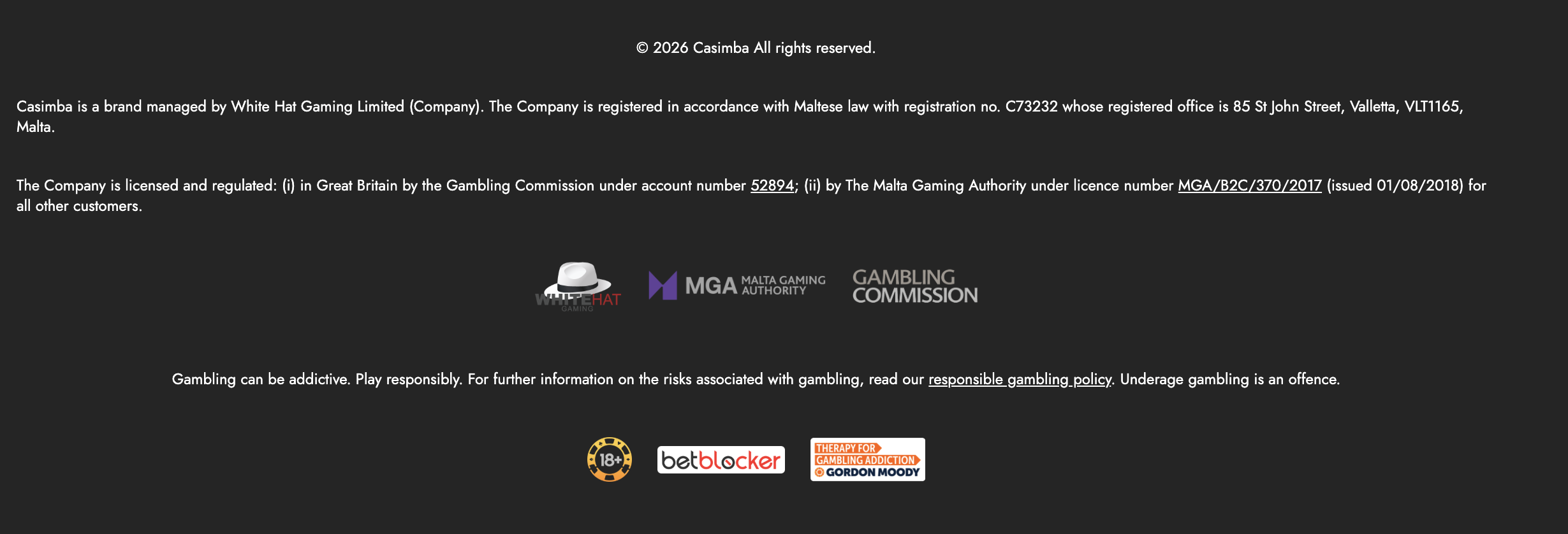
Licensed operators with real certification usually display a testing-lab seal — eCOGRA, iTech Labs, or GLI are the names to look for — in the site footer or a dedicated "fairness" or "responsible gaming" page.
2
Check the certificate is current
A genuine seal usually links to a certificate or the lab's own verification page. If the seal is just an image with no link, or the link is dead, treat it as unverified.
3
Cross-check the licence separately
A fairness certificate isn't a substitute for a real licence. Check the operator's licence number against the regulator's own public register — see our Licensed Casinos page for how we do this.
4
Look at game-level RTP, if published
Reputable providers publish RTP per game, often inside the game's own info/paytable screen. A missing or unusually vague RTP figure on a real-money slot is a flag worth noting.
This is the practical answer to how to verify a casino's fairness certification and how to check for eCOGRA or iTech Labs certification: the seal should be clickable, current, and backed by a licence you can independently confirm — not just a badge sitting in a footer.
Fake Licences and Fake Review Sites
Some scam operators display a licence number that either doesn't exist, belongs to a different company, or is copied from a legitimate site. The fix is the same every time: don't trust the number as displayed — look it up directly on the regulator's own public register (MGA or UKGC, depending on what's claimed) rather than clicking a link the casino provides.
Fake review sites compound this by ranking unlicensed or blocked operators highly, often using generic praise with no specific detail about withdrawal times, verification steps, or actual game libraries. Genuine reviews usually mention specifics that only come from testing an account; vague, uniformly five-star pages with no criticism anywhere are worth treating with suspicion. Our own Trust & Methodology page sets out exactly what we check before any casino appears on this site.
Why Some Casinos Never Seem to Pay Out
A slow or refused withdrawal is more often a wagering requirement, verification (KYC) step, or payment-method limit than outright theft — but a pattern of unexplained delays, shifting reasons, or support going silent once a big win is requested is a genuine red flag. Check our Fast Payout Casinos guide to see realistic payout timeframes, and if a specific operator has a documented pattern of refusing payouts, check whether it's already on our Blocked Casinos list.
How to Report a Suspect Site
1
Gather your evidence
Screenshot the licence claim, any withdrawal correspondence, and account statements before doing anything else — some sites alter or remove account history once a dispute starts.
2
Report to the claimed regulator
If the site claims an MGA or UKGC licence, both regulators accept player complaints directly through their own websites — this is more effective than a public review.
3
Report to GRAI if it targets Irish players
For sites operating without any recognised licence at all and specifically targeting Irish players, GRAI's remit is the relevant contact — see our Gambling Regulations in Ireland guide for context on where that fits.
Casinos We Will Not Send You To
We don't list every operator we come across — some fail our licence check, some fail our fairness-certificate check, and some have a documented pattern of payout refusal. The full list, with reasons, is on our Blocked Casinos page.
FAQ
Are online slots rigged?
Certified slots from licensed providers are not — their RNG is independently tested and their RTP is fixed at the software level, not adjusted by the casino.
Can a licensed casino manipulate RTP to make me lose more?
Not on a certified game. The RTP is set in the software itself and audited by an independent lab; the casino doesn't control it session by session.
What's the difference between house edge and being scammed?
House edge is a fixed, published mathematical advantage that applies to every player equally. Being scammed involves an unlicensed operator, a fake certificate, or a refusal to pay out — not the normal math of the game.
How do I check if a casino's fairness certificate is real?
Look for a clickable seal from a named testing lab (eCOGRA, iTech Labs, GLI) that links to an actual certificate, then separately verify the casino's licence number on the regulator's own public register.
Why hasn't a casino paid out my withdrawal yet?
Most delays come down to wagering requirements, identity verification, or payment-method processing times rather than a refusal — but a pattern of shifting excuses or silence is worth reporting.
Where do I report a casino I think is rigged or unlicensed?
Report directly to the regulator it claims to be licensed by (MGA or UKGC), or to GRAI if it's an unlicensed site targeting Irish players.
Sources
1MGA (Malta Gaming Authority) — public licence register
2UKGC (UK Gambling Commission) — public licence register
3GRAI (Gambling Regulatory Authority of Ireland) — regulatory remit and complaint routes
Page Updates
27 August 2026 — Checked against current MGA and UKGC public register information and our own blocked-casino documentation; no changes to how independent RNG testing works since our last review.
How We Check These Tools
Before we list any casino, we check its licence against the relevant regulator's public register and look for a published RNG or fairness certificate from an independent testing lab. Anything that fails either check goes on our Blocked Casinos list instead.
Irish Lucky is a comparison site. This guide is educational, not an accusation against any named operator. We may earn a commission if you sign up through a casino link, but that never determines whether we call a site's games fair. 18+ only.