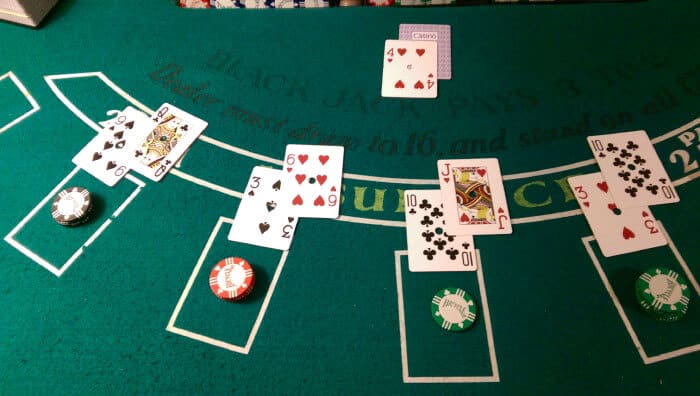
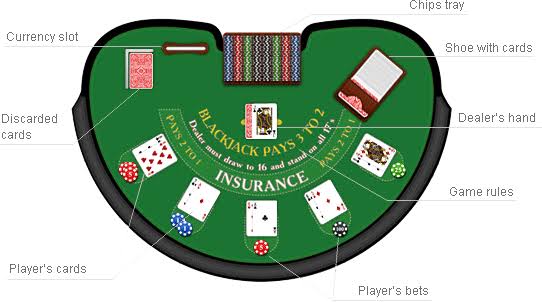
Blackjack is one of the simplest casino games to learn and one of the lowest-house-edge games on the felt — around 0.5% when you play a standard shoe with basic strategy. The goal is not to race to 21. It is to finish with a higher total than the dealer without going over. This guide covers rules, payouts, variants, demo vs real money, and how RNG differs from a live stream. For real-dealer tables and a casino list, use live blackjack. Card-by-card options stay on the blackjack player guide.
18+ · entertainment only
This page is for Irish players aged 18 and over. Even perfect basic strategy keeps a long-term house edge. Play with money you can afford to lose. See responsible gambling.
How We Check Blackjack Tables
Before we recommend a live or RNG table elsewhere on the site, we look at the rules in the lobby, not only the T&Cs: a 3:2 natural (not 6:5), posted S17 or H17, and whether the RNG version has a demo so you can drill decisions before you deposit.
You play against the dealer, not the other seats. Their hands do not change yours.
Three ways to win:
Your total beats the dealer’s without going over 21.
The dealer busts and you are still in the hand.
Your first two cards are a natural blackjack (Ace + any ten-value card) and the dealer does not have one.
Two ways to lose: you bust, or the dealer’s final total is higher. Equal totals are a push — the stake comes back, with no payout.
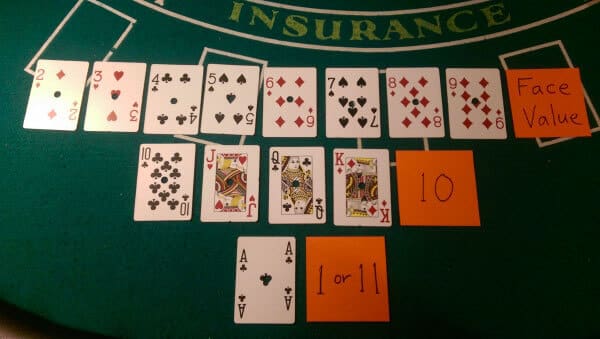
Suits do not matter. 2–10 are face value. Jack, Queen, and King are 10. An Ace is 1 or 11, whichever helps. A natural at most reputable tables pays 3:2. Some tables pay 6:5, which adds roughly 1.4 percentage points to the house edge. Check that number before you sit.
Played correctly, basic strategy on a standard shoe brings the house edge to about 0.5% — among the lowest in the casino, and far below slots or most side bets. Your decisions still matter: the dealer follows a fixed script; you do not.
Low house edge
Basic strategy on a 3:2 shoe is about 0.5%. H17 (dealer hits soft 17) adds about 0.2%. 6:5 naturals wipe out more edge than those rule tweaks put back.
What you control
Hit, stand, double, split, or surrender (where offered). The dealer must hit 16 or below and stand on 17 or above, with one wrinkle on soft 17.
How to Play Blackjack Step by Step
Online, there is no chip buy-in on the felt. You stake from the cashier, then the round follows the same logic as a land table.
1
Place your bet
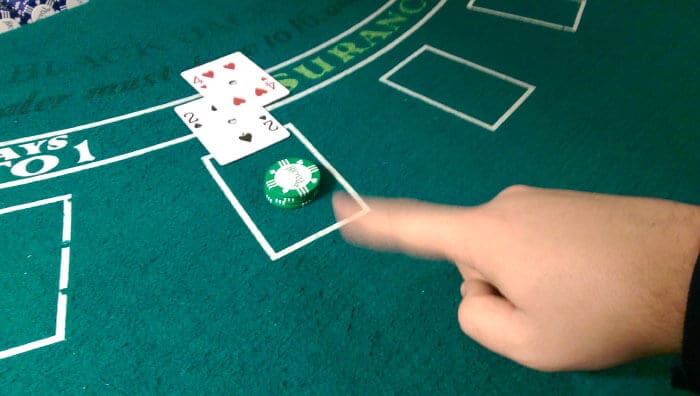
The stake goes down before cards are dealt. That amount is your main wager unless you later double or split.
2
Read the first two cards
You receive two cards face up. The dealer shows one up-card and keeps a hole card face down (European blackjack delays that second dealer card until you have finished).
3
Use the dealer’s up-card
Every basic-strategy decision is based on what the dealer is showing. That is the most important information on the table.
4
Choose how to play
Hit, stand, double down, split a pair, or surrender where the table allows it. RNG tables use buttons; live tables add a short timer.
5
Dealer plays a fixed hand
Hit on 16 or below, stand on 17+. On Ace-6 (soft 17), S17 tables stand and H17 tables hit. S17 is slightly better for you.
6
Payouts
A normal win pays even money (1:1). A natural pays 3:2 (or 6:5 on a poor table). A push returns the stake.
Your Five Options on Each Hand
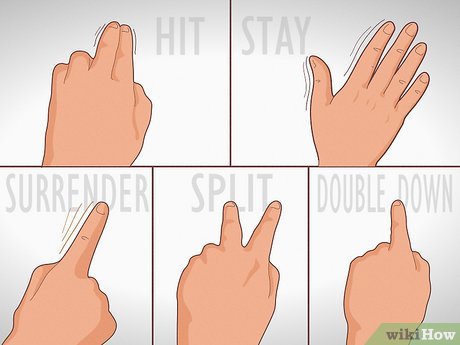
Hit — take another card. Repeat until you stand or bust.
Stand — keep the total and end your turn. Stand on hard 17 or higher every time; below that, the dealer’s up-card decides.
Double down — double the original bet for exactly one more card, then you are done. Common on a hard 10 or 11 against a weak up-card.
Split — matching first-two-card values (including two ten-value cards) can be played as two hands for an extra bet equal to the original. Always split Aces and 8s in basic strategy. Never split 10s or 5s. Split Aces usually get one card each, with no further hit.
Surrender — forfeit half the stake and end the hand on the first two cards, before you hit or double. Late surrender is the usual form. Typical spots: hard 16 vs 9, 10, or Ace; hard 15 vs 10. Not every table offers it.
Live studios still expect those signals on camera. RNG lobbies map the same choices to buttons. For live table pace and chat rules, use the live blackjack guide.
Blackjack Payouts, Odds and House Edge
Even money (1:1) — you beat the dealer without a natural.
Natural 3:2 vs 6:5 — 3:2 is the standard we look for. 6:5 looks close on the felt and is not: it adds about 1.4 percentage points of house edge, more than the whole edge of a well-played 3:2 game.
Push — same total; stake stays, no win.
Insurance / even money — offered when the dealer shows an Ace. Insurance is a side bet up to half the original stake that the hole card is ten-value, paying 2:1. A ten is in the hole about 30.8% of the time; you need 33.3% just to break even. Even money is the same wager when you already have a blackjack. Decline both unless you are counting cards — and counting does not work on typical online shoes.
Walk away from “Blackjack pays 6 to 5.” Online, stay with operators that publish 3:2 naturals. See how we rate casinos.
Rule tweaks that move the edge (player-friendly unless noted):
Rule
Typical effect
Doubling after splits (DAS)
about +0.15% to the player
Re-splitting Aces (RSA)
about +0.08% where offered
Late surrender, used correctly
about +0.08%
Dealer hits soft 17 (H17)
about +0.2% to the house vs S17
Continuous shuffle (CSM)
slightly worse than a standard shoe; more hands per hour
How the Dealer Plays
The dealer does not choose. Hit 16 or below, stand 17 or above. S17 stands on every 17, including Ace-6. H17 hits Ace-6 and costs you about 0.2%. When the up-card is an Ace or a ten-value card, many games peek at the hole card for dealer blackjack before you play; if they have it, non-blackjack hands lose at once, and a player blackjack pushes.
The dealer cannot split, double, or surrender. If they bust, remaining player hands win.
Soft Hands vs Hard Hands
A hard hand has no Ace, or the Ace must count as 1 to stay at 21 or under. Hard 16 can bust on the next card.
A soft hand still has an Ace that can count as 11. Soft 17 (Ace-6) cannot bust on one card: a 9 turns it into a hard 16, not 26. That is why soft hands play more aggressively than hard hands of the same total — hit or double a soft 17; stand a hard 17.
Basic Strategy and Cheat Sheet
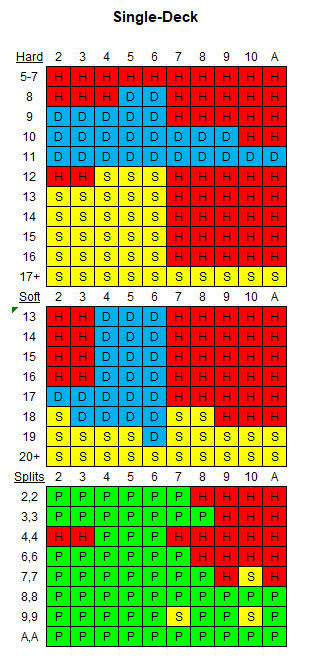
Basic strategy is the best play for every pair of your total and the dealer’s up-card. It was worked out in the 1950s and refined with simulation. On a standard 3:2 shoe it brings the house edge to about 0.5%. You do not need the full chart memorised on day one. Five rules cover most spots:
Always split Aces and 8s.
Never split 10s, 5s, or 4s.
Double a hard 11 against any up-card except an Ace.
Stand hard 17+. Hit 11 or below. On hard 12–16, stand vs dealer 4–6; hit vs 7–Ace (hit hard 12 vs 2 or 3).
Never take insurance or even money.
Blackjack Basic Strategy Chart
HHit
SStand
DDouble (Hit if not allowed)
PSplit
Your Hand
2
3
4
5
6
7
8
9
10
A
17+
S
S
S
S
S
S
S
S
S
S
16
S
S
S
S
S
H
H
H
H
H
15
S
S
S
S
S
H
H
H
H
H
14
S
S
S
S
S
H
H
H
H
H
13
S
S
S
S
S
H
H
H
H
H
12
H
H
S
S
S
H
H
H
H
H
11
D
D
D
D
D
D
D
D
D
H
10
D
D
D
D
D
D
D
D
H
H
9
H
D
D
D
D
H
H
H
H
H
8 or less
H
H
H
H
H
H
H
H
H
H
Assumes standard multi-deck rules: dealer stands on soft 17, double after split allowed, no surrender. Some tables vary — check the rules on your specific table before relying on this chart.
Why the chart tells you to stand on high totals
Your chance of going bust climbs fast as your hand total increases — which is exactly why standing becomes the statistically better play at 12+ against most dealer up cards.
Total 12
31%
Total 13
39%
Total 14
56%
Total 15
58%
Total 16
62%
Total 17+
69%+
The chart above is the full hard / soft / pair view. Match a printed card to your table: number of decks, S17 vs H17, and whether DAS is allowed. Strategy cards are legal at most tables. Deeper rule notes: how to play blackjack.
Blackjack Variants
These are the names you will see in RNG lobbies. Live studio labels (Vegas, Speed, Infinite, Power) are on the live blackjack page.
Classic — one to eight decks; the default ruleset.
European — dealer takes the second card only after players finish; no early blackjack peek.
Atlantic City — typically S17 and late surrender.
Vegas Strip — often four decks, splits up to three times, S17.
Spanish 21 — all 10s removed; extra bonuses and DAS-style flexibility that do not fully offset the missing tens.
Pontoon — “twist” / “stick”; a five-card trick can win regardless of the dealer.
Double Exposure — both dealer cards shown; blackjack often pays even money; ties usually favour the dealer.
Super Fun 21 — extra player options; blackjack often pays 1:1 except a narrow suited case.
Perfect Pairs — side bet on the first two cards pairing.
Blackjack Switch — two hands; you may swap the top cards; dealer 22 typically pushes; blackjack often even money.
Progressive — jackpot side bet on set combinations.
Variants that look generous
If the name promises extra doubles, free splits, or both dealer cards, read the catch on the felt first:
Spanish 21 — missing 10s do more damage than the bonus rules return.
Super Fun 21 — 1:1 blackjack outweighs the extras.
Free Bet Blackjack — free doubles/splits, but a dealer 22 often pushes every remaining hand.
Blackjack Switch — the swap is real; so are even-money blackjacks and dealer-22 pushes.
Live Dealer vs RNG
The rules can be the same. The delivery is not.
RNG — software draws, no physical shoe, often 200+ hands an hour. Fast for drilling strategy; faster also means more stake turned over per hour. Demo mode exists on many RNG tables.
Live dealer — a real dealer and cards on a stream, about 50–60 hands an hour. No demo: a studio seat needs a real-money bet. Full table list: live blackjack Ireland. Wider live lobby: live casino Ireland.
Pros
RNG is the fastest way to practise basic strategy and usually has lower minimums.
Live dealer shows physical cards and a human dealer, which many players trust more.
A good lobby has both, so you can demo on RNG then move to a live seat.
Cons
RNG has no cards to watch; some players dislike that, even when the RNG is certified.
Live needs a stable connection and usually higher minimums; popular seats fill at peak hours.
Neither format is a counting game online: RNG reshuffles every hand; live shoes shuffle often and limit penetration.
Demo Play vs Real Money
Use RNG demo to make hit / stand / double / split automatic before you deposit. Live tables do not offer free play. Variance is real on either format once money is down — a 0.5% house edge still produces losing sessions.
Common Beginner Mistakes
Standing hard 16 vs a dealer 10 because hitting “feels worse.” Standing loses about 77% of the time; hitting about 76%. Surrender is better still if the table allows it vs 9, 10, or Ace.
Taking insurance because the dealer “probably has it.” The maths does not clear the 2:1 price.
Splitting 10s. You already have 20. Do not turn one near-certain winner into two ordinary hands.
Copying the dealer. Their script is not optimal for you. Playing like the dealer costs on the order of 5% per hand versus basic strategy.
No session cap. Decide the loss limit before the first hand. The edge is small; a streak is not.
Blackjack Terminology
Hit / stand / double / split / surrender — the five main acts.
Push — tie; stake returned.
Up-card / hole card — dealer’s face-up and face-down cards.
Soft / hard — Ace still countable as 11, or not.
Natural — Ace + ten-value on the first two cards.
S17 / H17 — dealer stands vs hits on soft 17.
DAS / RSA — double after split; re-split Aces.
CSM — continuous shuffle machine.
Insurance — side bet that the dealer has blackjack when showing an Ace.
Bankroll and Responsible Play
A workable session bankroll is 40–50 table minimums. At a €10 table that is about €400–€500 — enough that a normal losing run does not end the session in the first few minutes.
Set a loss limit before you open the lobby. Do not raise stakes to “win it back.” Take breaks. Move a win to withdrawable balance rather than leaving it in play.
If it stops feeling like entertainment, use our responsible gambling page for Irish support options. 18+ only.
Online Blackjack FAQ
Is blackjack the easiest casino game to win at?
By the numbers it is among the best odds in the casino — about 0.5% house edge with basic strategy at a 3:2 table, lower than typical roulette, baccarat Banker aside, and far below slots. That is not a player edge. The house is still favoured.
Can I play blackjack for free online?
Yes, on many RNG tables in demo mode. Live dealer blackjack does not have a demo, because a real studio is streaming. Practise on RNG, then move to a live seat via our live blackjack list.
Can you count cards online?
Not in any useful way. RNG reshuffles every hand. Live games shuffle often and do not deal deep enough into the shoe for a meaningful count.
What is the worst hand in blackjack?
A hard 16. It loses more often than it wins either way. Stand vs dealer 2–6; hit vs 7–Ace; surrender vs 9, 10, or Ace if the table allows it.
How long does basic strategy take to learn?
A few hours for the five core rules; a few weeks of casual play to make the chart automatic. You can keep a strategy card next to the screen.
What is a sensible starting bankroll?
About 40–50 minimum bets per session. At €10 that is €400–€500. Size the table to the bankroll, not the other way around.
Should I play live or RNG?
RNG for speed, lower mins, and demo. Live if you want a real dealer and a slower hour. For live tables and operators we list, see live blackjack Ireland.
Page Updates
New blackjack rules guide: 3:2 vs 6:5, basic strategy cheat sheet, RNG vs live, and demo vs real money. Casino lists stay on the live blackjack page.