Analyzing Your Play: Essential Techniques for Poker Improvement
Master the art of self-analysis in poker. Learn systematic review methods, hand history analysis, leak identification, and data-driven approaches to elevate your game.
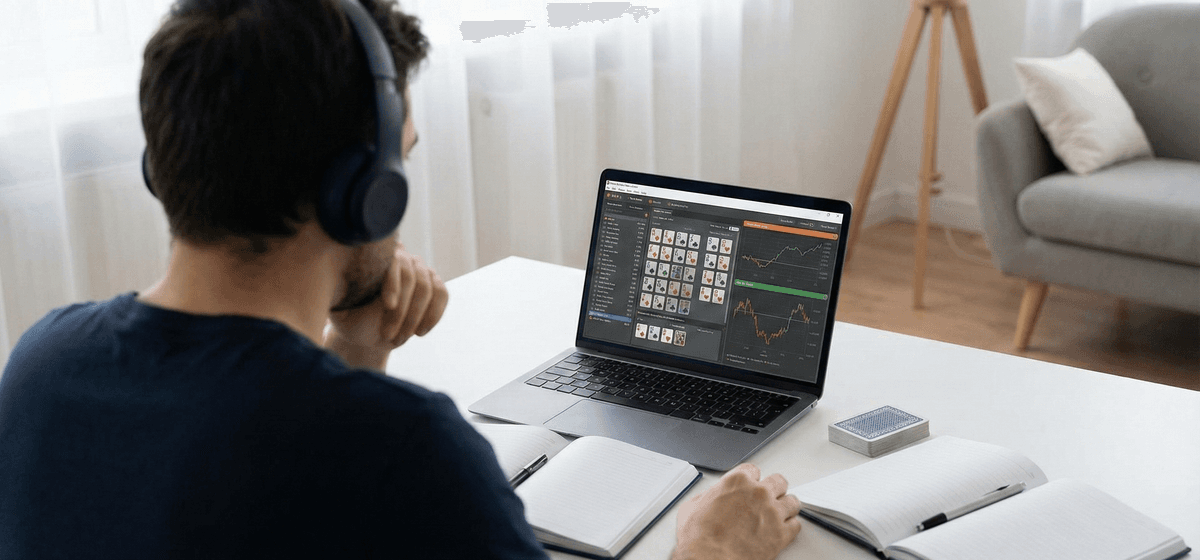
Analyzing Your Play: Essential Techniques for Poker Improvement
One of the most significant differences between amateur and professional poker players isn't their in-game decisions—it's what they do away from the table. Serious players spend considerable time analyzing their play, identifying leaks, and refining their strategy. This systematic approach to self-improvement is the engine that drives long-term success in poker.
Why Hand Analysis Matters
Many players make the mistake of only reviewing hands they lost or hands that felt confusing. However, comprehensive analysis of all your sessions reveals patterns you'd otherwise miss. Studies show that players who regularly analyze their play improve 3-4 times faster than those who don't.
The Improvement Multiplier:
Player Without Analysis: 100 hours play = +2 skill points
Player With Analysis: 100 hours play + 20 hours review = +8 skill points
ROI of Analysis Time: 300% improvement acceleration
The Systematic Review Process
1. Immediate Post-Session Notes
Right after your session ends, spend 5-10 minutes capturing your thoughts while they're fresh:
Session Review Checklist:
| Category | Questions to Ask |
|---|---|
| Mental State | Was I focused? Tilted? Fatigued? |
| Key Hands | Which hands confused me? |
| Opponent Notes | What patterns did I notice? |
| Technical Issues | Did I struggle with any concepts? |
| Emotional Reactions | When did I feel uncomfortable? |
2. Daily Hand Review (20-30 minutes)
Select 3-5 hands from your session that meet these criteria:
- Hands where you were uncertain about your decision
- Hands involving large pots (>50 big blinds)
- Hands where your opponent surprised you
- Hands where you deviated from your standard strategy
Analysis Framework:
For each hand, work through these steps:
- Reconstruct the action - Write out the exact sequence
- Identify decision points - Where did you have meaningful choices?
- Calculate the math - What were the pot odds, equity, EV?
- Consider alternatives - What other lines were available?
- Evaluate outcomes - Was this +EV regardless of result?
3. Weekly Pattern Analysis
Once weekly, review your database statistics to identify trends:
Key Metrics to Track:
| Statistic | Healthy Range | Red Flags |
|---|---|---|
| VPIP (Voluntarily Put $ In Pot) | 15-25% | >30% or <10% |
| PFR (Pre-Flop Raise) | 12-20% | VPIP - PFR gap >8% |
| 3-Bet Percentage | 5-9% | <3% or >12% |
| Aggression Frequency | 40-60% | <30% or >70% |
| WTSD (Went To Showdown) | 23-28% | >32% (too passive) |
| W$SD (Won $ At Showdown) | 50-55% | <48% (weak hand selection) |
Hand History Analysis Tools
Modern poker requires leveraging technology for effective analysis:
Essential Software
Tracking Software:
- Hold'em Manager 3 or PokerTracker 4 for database management
- Allows filtering hands by specific conditions
- Generates automated reports on your tendencies
Equity Calculators:
- Flopzilla for range analysis
- Equilab for hand vs range calculations
- Essential for understanding your mathematical mistakes
Solver Tools:
- PioSOLVER or GTO+ for advanced analysis
- Shows theoretically optimal plays
- Helps identify strategic blind spots
Identifying Common Leaks
The Math-Based Approach
Let's examine a common leak with real numbers:
Example: Overfolding to River Bets
Scenario:
- Pot Size: $100
- Opponent Bets: $75
- Required to Call: $75
- Total Pot After Call: $175

Pot Odds: $75 / $175 = 42.9% equity needed

If you fold more than 57.1% in this spot, your opponent's bluff
automatically shows profit, even with random cards.

Your Actual Fold Frequency: 68%
Leak Cost: You're folding 10.9% too often
Expected Loss: ~$8 per occurrence of this spot
Positional Imbalances
Review your statistics by position:
Sample Position Analysis:
| Position | Win Rate | VPIP | PFR | Problem Area |
|---|---|---|---|---|
| Button | +8bb/100 | 32% | 24% | ✓ Healthy |
| Cutoff | +5bb/100 | 26% | 20% | ✓ Healthy |
| Middle | +1bb/100 | 18% | 14% | Too tight? |
| Early | -2bb/100 | 12% | 10% | Losing position |
| Small Blind | -15bb/100 | 28% | 8% | MAJOR LEAK |
The data reveals a massive leak in the small blind: high VPIP but low PFR indicates too much calling and not enough raising. This is a common leak costing significant money.
Creating an Action Plan
Once you've identified leaks, create specific, measurable improvements:
Leak Resolution Template:
Identified Leak: Overfolding to river bets in position
Target: Reduce fold frequency from 68% to 55%
Action Steps:
  1. Study bluff-catching theory for 2 hours this week
  2. Mark 10 river-call hands per session for review
  3. Track new fold frequency daily
Success Metric: Achieve 55% ± 3% fold rate by end of month
The Peer Review Advantage
Solo analysis has limits. Consider these collaborative approaches:
Study Groups
Form or join a study group of similar-stakes players:
- Share interesting hands weekly
- Challenge each other's reasoning
- Expose blind spots in your thinking
- Pool software resources
Study Group Structure:
- 3-5 members maximum
- Weekly 90-minute sessions
- Each member presents 2-3 hands
- Use screen sharing for hand replayers
Coaching and Mentorship
If your budget allows, professional coaching accelerates improvement:
- Identifies leaks you can't see
- Provides structured learning paths
- Offers accountability
- Gives access to higher-level thinking
According to PokerStrategy.com, players who invest in coaching see an average ROI of 300-500% on their coaching investment through improved results.
Advanced Analysis Techniques
Population Tendency Exploitation
Track how your opponent pool plays specific situations:
Database Filtering Example:
Filter Criteria:
- 3-bet pot, you're in position
- Flop is Axx rainbow
- Opponent checks to you

Your Database Results (500 hands):
- Villain check-folds to c-bet: 72%
- Villain check-calls: 21%
- Villain check-raises: 7%

Strategy Adjustment: Your c-bet can be nearly 100% frequency
with any two cards because population over-folds by ~15%
Variance Analysis
Understanding variance helps you evaluate your true skill level:
Variance Calculation:
Standard Deviation = √(Variance × Hands Played)

Example with 10,000 hands:
Win Rate: 5bb/100
Standard Deviation: 80bb/100

Expected Range (68% confidence):
= 5 ± (80 / √100)
= 5 ± 8
= -3bb/100 to +13bb/100

This explains why you might be losing despite good play!
Review Frequency Guidelines
Recommended Time Allocation:
| Activity | Frequency | Time Investment |
|---|---|---|
| Immediate Notes | After every session | 5-10 minutes |
| Hand Review | Daily | 20-30 minutes |
| Database Analysis | Weekly | 45-60 minutes |
| Study Group | Weekly | 90 minutes |
| Deep Strategy Study | Monthly | 3-4 hours |
The 1:4 Rule: For every 4 hours of play, invest 1 hour in analysis. This 20% time investment can double your improvement rate.
Common Analysis Mistakes
Mistake #1: Results-Oriented Thinking
Don't judge decisions by outcomes. A bad beat doesn't mean you played wrong:
Example:
You raise AA, villain calls with 72o, flops two pair, you lose.
Result: -100bb
Process: +EV by massive margin
Conclusion: Excellent decision, unlucky outcome
Mistake #2: Sample Size Errors
Don't make sweeping changes based on small samples:
Statistical Significance:
- 1,000 hands: Random variance dominates
- 10,000 hands: Patterns begin emerging
- 50,000+ hands: Reliable conclusions possible
Mistake #3: Ignoring Game Theory
Your analysis should consider:
- How exploitable is your strategy?
- Are you balanced in your ranges?
- Can opponents counter-exploit your adjustments?
Resources like Upswing Poker offer excellent training on balancing exploitative and GTO approaches.
Tracking Your Improvement
Create a progress journal with:
Monthly Review Format:
- Overall win rate trend
- Specific leaks addressed
- New concepts learned
- Confidence level in various situations
- Areas still needing work
Sample Progress Tracking:
Month 1: -2bb/100 (learning phase)
Month 2: +1bb/100 (fixing major leaks)
Month 3: +3bb/100 (implementing adjustments)
Month 4: +5bb/100 (strategies solidifying)
Month 6: +7bb/100 (consistent winner)
Conclusion: Analysis as a Habit
The best poker players make analysis a non-negotiable part of their routine. Like physical training for an athlete, mental training through hand analysis builds the skills that separate winners from losers.
Start small: commit to reviewing just 3 hands per day. Use the frameworks provided here to structure your thinking. Track your progress monthly. Join or form a study group. Consider professional coaching when you plateau.
Remember, every hour spent in thoughtful analysis can save you dozens of hours of making the same mistakes at the table. The players who consistently analyze their play aren't just improving—they're improving faster than their competition, creating a compounding advantage over time.
Your poker success isn't determined by the cards you're dealt, but by how effectively you learn from every hand you play. Start analyzing today, and watch your results transform tomorrow.
Additional Resources
For deeper exploration of poker analysis techniques:
- PokerCoaching.com - Comprehensive training with hand review tools
- Run It Once - Advanced strategy videos and forums
- Two Plus Two Forums - Community hand analysis and discussion
Remember: Great players aren't born, they're built through consistent, honest analysis of their play.
⚠️ Responsible Gambling Reminder
While understanding poker strategy and mathematics can improve your game, always gamble responsibly. Set limits, take breaks, and remember that poker involves both skill and chance. For support, visit www.problemgambling.ie.
Related Articles

Poker and Psychology: Master the Mind Game Behind Every Hand
Explore the psychological foundations of poker success. Learn cognitive biases, emotional control, game theory psychology, and mental frameworks for optimal decision-making.

Dealing with Downswings in Poker: Mental Strategies for Variance
Learn how to handle poker downswings with proven psychological strategies. Master bankroll management, emotional control, and mental resilience during losing streaks.

When to Move Up in Stakes: A Data-Driven Approach to Climbing the Poker Ladder
Master the art of moving up in poker stakes. Learn bankroll requirements, skill assessment metrics, psychological readiness indicators, and strategic timing for successful stake transitions.